
My grandmother knitted. Let me clarify – she didn’t just dabble in knitting every now and again when there was nothing better to do; she was a knitter. She could work up a Fair Isle Showstopper whilst keeping an eye on Coronation Street and telling my grandfather where he’d left his glasses (always on his head), all without pausing in her inexorable knitting.
I realise now that she was working those needles with the hypnotic metronomic pulse of an industrial knitting machine, but to my young eyes her hands simply danced, accompanied by the gentle tik tok tik of the bamboo needles clicking against each other. When I was around eleven years old she gave me a navy jumper that she’d just finished knitting. “This’ll keep you going.” she said in that taciturn Yorkshire style of hers. At the time I thought little of it, but I was to discover years later just how true those words were.
I was chucking old clothes out while moving flat recently when I rediscovered that old jumper in a box at the back of my wardrobe. It was almost as new as when she gave it to me; the wool showing no signs of wear or tear despite how many times I’d been persuaded to give it away over the years.
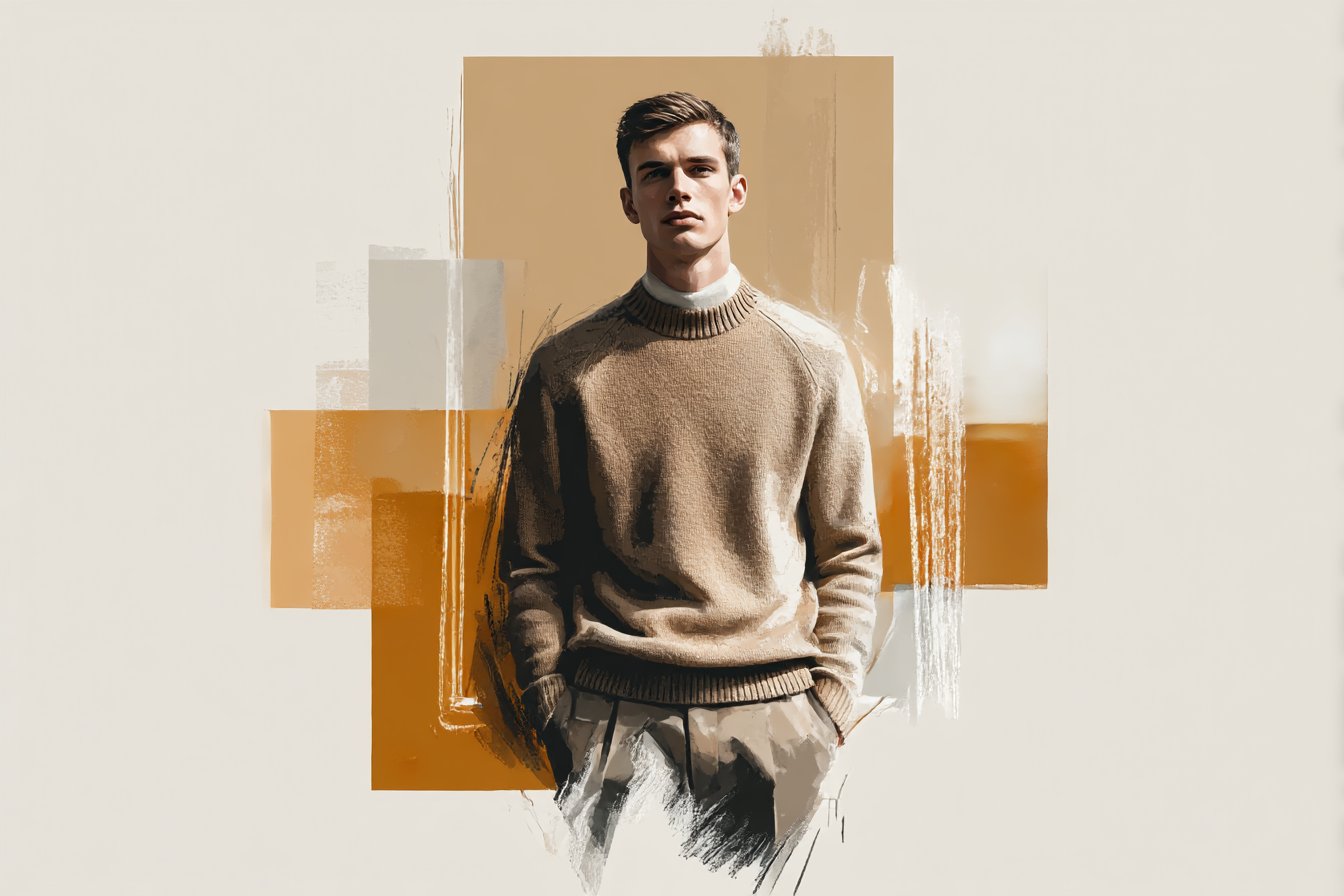
At that point it hit me – what makes knitwear proper.
The Real deal This wasn’t just a jumper that had lasted longer than any of the dogs I’ve owned (sorry Winston), but something sewn together with skill and the proper materials. The amount of care that had gone into making this jumper meant that even after dozens of washes and years of wear, it still looked and felt like new; older than me in fact. This wasn’t something mass-produced overseas in a factory that probably doesn’t exist anymore, but crafted by someone who took pride in their work and knew how to use their bloody needles properly.
I bring this up because I can’t talk about British knitwear without first acknowledging the domestic knitwear industry that preceded it. Knitting became industrialised during the revolution but the fundamentals are the same; know your fibres, know your yarn structures and knit things that suit the clothes we need to wear in our inclement island of a climate. Most of that know-how remains with brands who still manufacture their knitwear here in the UK, despite many cheaper alternatives flooding our markets from abroad. <img class=”size-full wp-image-6781″ src=”http://joewears.co.uk/wp-content/uploads/2025/04/im1979_Proper_Knitwear_That_Last_British_Brands_Making_Quali_e07e254-38ea-43f6-bfe9-9d45f7f622cf_1.jpg” alt=”im1979_Proper_Knitwear_That_Last Britsh_Brands_Making_Quali_e07e254-38ea-43f6-bfe9-9d45f7f622cf_1″ width=”1200″ height=”803″ /> Proper knits aren’t cheap.
That’s just a fact. If you’ve been weaned on high-street pricing then preparing yourself for the price-tags of traditionally manufactured British jumpers is going to come as something of a shock. However, if you’ve got your head screwed on and understand some basic maths then you’ll realise that a quality jumper is far better value than you’re probably used to.
That £30 panda monstrosity you bought from the sports-brand supermarket? With any luck it’ll last you a season before it pills, stretches or generally looks sad. A £300 jumper from a quality manufacturer should last you 15+ years if looked after correctly. £30 for 1 year of wear versus £300 for 15+ – who’s looking cheap now?
There’s a reason the Scottish borders are still considered knitwear Mecca by makers from all over the world. Put simply, Hawick is to jumpers what Northampton is to shoes; traditional skills and the infrastructure to support those skills have been maintained here despite every financial incentive to get rid of them. These brands, William Lockie being no exception, have been making knitwear in Hawick since 1874 using techniques that have changed very little since RJ Philip’s handed thatтоулы step grandson Alfie.
So what separates William Lockie from your high-street fisherman’s jumper? It all starts with the materials. Traditional Scottish knitwear utilise fibres such as geelong lambswool (exceptionally fine lambwool from Australia), the finest inner Mongolian cashmere or tough but incredibly durable wool from the Shetland Isles.
Fibre length is important here; longer fibres make for stronger, harder-wearing yarn which will be more resistant to pilling. Yarns will be predominantly two- or three-ply too as opposed to the single-ply we now see fuelling our holey jumpers from sports brands. I paid William Lockie a visit a few years ago while researching a piece.
It wasn’t until I was stood watching their production process that it really hit me how “hand-made” their jumpers still feel. Don’t get me wrong, there are plenty of impressive looking machines working away, but it’s the craftsmanship of those operating them that sets them apart. Few of the processes are fully automated and each individual is constantly making subtle adjustments, checking quality and making decisions as they work.
Machines may knit the panels, but there are expert pairs of eyes judging up against benchmarks that have been set for generations. What does this level of care and attention mean for the final product? William Lockie’s lambswool crewneck, to pick one example, just feels right.
The collar sits comfortably against your neck without stretching out of shape or sagging. The rib at both cuffs and hem is tight enough to create shape but avoids that dreaded “mushroom” silhouette. The wool has a sublime hand-feel; weighty without feeling itchy, warm without being clammy.
Most importantly it gets better with age; softening and developing character as the years go by rather than losing it. <img class=”size-full wp-image-6782″ src=”http://joewears.co.uk/wp-content/uploads/2025/04/im1979_Proper_Knitwear_That_Last_British_Brands_Making_Quali_e07e254-38ea-43f6-bfe9-9d45f7f622cf_2.jpg” alt=”im1979_Proper_Knitwear_That_Last Britsh_Brands_Making_Quali_e07e254-38ea-43f6-bfe9-9d45f7f622cf_2″ width=”1200″ height=”803″ /> Jamieson’s of Shetland are another brand who should be on your radar. Jamieson’s specialise in traditional Fair Isle patterning using wool sourced from Shetland sheep that are raised and sheared on the Shetland Isles themselves. Every jumper here tells a story; traditional patterns passed down through generations and inhabited by a unique mixture of Nordic and Scottish influence.
There’s real character and provenance to these garments that puts factory-produced runway fodder to shame. I’ve owned my Jamieson’s Fair Isle crewneck for close to ten years. It lives on my winter weekends clothes rail and gets worn more than anything else in my wardrobe.
Sure enough it’s had plenty of wears, a run in with a barbed wire fence and been borrowed enough times to lose count. Despite all this, it still looks virtually brand new thanks to the wool and the way in which it was constructed. Proper wool wants to go back to how it was, to continue doing its job in spite of how you treat it.
You Might Also Like

Johnston’s of Elgin may be just south of the border but they too deserve an honourable mention. Johnston’s are one of the few fully vertical manufacturers we have left in the UK; from fibre grown to finished product. Established in 1797, they take pride in every step of the process but are now perhaps best known for their cashmere.
It may be their Scottish roots that are central to their brand identity but now comfortably exists in both realms of heritage knitwear and modern luxury fashion. I’ve had their lightweight cashmere crewneck for around 5 years now and it really is some of the finest wool I’ve come across. It’s dense enough to provide serious warmth but with a softness that makes me want to reach out and touch everything I own to see if it’s this nice.
Proper cashmere should feel like rain on your skin when you compare it to proper synthetics. John Smedley are perhaps the bridge between traditional manufacturers and luxury clothing brands. Their emphasis on finer gauge knitwear means they appeal to more fashion-conscious individuals than some of the brands I’ve already mentioned but are still making their garments to a standard that most high-street brands can only dream of.
Smedley specialise in finer merino wool and Sea Island cotton to create items that work as easily in an office as they do at the weekend. Theirmerino wool polo’s are up there with the best in terms of versatility. Breathable enough to wear under a blazer yet substantive enough to hold its shape year after year.
They’re the sort of clothes that don’t scream “look at me!” but rather speak for themselves through unparalleled fit and feel. If your tastes lean more fashion than function, North Sea Clothing’s Royal Navy-inspired jumpers are also worth a look. Made from heavyweight British wool these are classics with a decidedly industrial edge.
Rather than luxury clothing meant for weekends away, think of North Sea Clothing as the toolkit end of knitwear. Built to keep you warm when the_weather_ is actuallybad, rather than cuddled up by the fire blogging about knitwear. <img class=”size-full wp-image-6783″ src=”http://joewears.co.uk/wp-content/uploads/2025/04/im1979_Proper_Knitwear_That_Last_British_Brands_Making_Quali_ac12ad3b-a2fa-42fd-844a-e02e56181191_0.jpg” alt=”im1979_Proper_Knitwear_That_Last Britsh_Brands_Making_Quali_ac12ad3b-a2fa-42fd-844a-e02e56181191_0″ width=”1200″ height=”803″ /> My favourite is the hefty roll-neck that comes in an undyed British wool. At well over £200, it’s nothing to scoff at but when you consider this will (probably) be around longer than you it doesn’t seem like such a big ask.
Buying from any of the above brands isn’t just a case of ensuring your jumper is made well, it’s about knowing where it’s from. If you’re after something that actually looks like it’s from this century then Albam are worth checking out. Produced in the Scottish borders using many of the same mills as our other brands, Albam manage to feel both timeless and modern in equal measure.
Beautiful cuts and details are matched with old-world manufacturing techniques to create pieces that transcend simple “heritage-brand” vibes. Each piece oozes substance without feeling costume-y; a problem some brands who’ve been manufacturing for generations suffer from. Knitwear Should Do More Than Look Good Whether it’s keeping you warm on a chilly office commute or a weekend away surfing; your jumper should be able to do its job without getting in your way.
That means breathable fabrics that move with you and protect you from the elements. It also means getting better with age, not worse. A proper jumper forms a sort of relationship with you; it conforms to you and your movements whilst retaining its own essential shape.
Looking after your quality knitwear is simple, but does go against most of what we’ve been told about clothes care. For starters, good wool jumpers don’t need washing that often. Ever wondered why sweaty people don’t smell as bad as you do?
Wool is naturally antibacterial and will actually repel odours when hung to air. I have jumpers I’ve never washed, only aired and spot cleaned when I’ve spilled something or eaten particularly garlic-heavy pasta. When you do need to wash them, opt for cool water with a gentle wool detergent and avoid cleaning products meant for regular clothes.
The latter will strip the natural oils from the wool and decrease its lifespan dramatically. As for drying; lay flat instead of hanging (aerates the fibres) or putting in the tumble dryer (heaven forbid). You can get jumper boards made out of wood if you want to get really fancy about it, but I find careful folding works just as well.
Small holes or general wear and tear don’t have to spell the end for your favourite jumper either. Most of these brands offer repair services should you be unfortunate enough to snag your jumper on a nail and rip the inside. Or you can use services like The Restory who will fix any clothes you deem too precious to throw away.
I once had a favourite cashmere crewneck ruined by a friends new puppy.

Couple of neat stitches later and it’s good as new; with an extra bit of personality to show for it. Few simple purchases will make you feel as connected to Britain’s manufacturing past as a quality knit from one of these brands.
Not only will they last you decades longer than your average sweatshop fodder, they’ll actually get better with age and thank you for looking after them. You’re not just buying a disposable product from a faceless brand; you’re continuing a legacy of making that’s all too rare these days. Back when I found my grandmother’s jumper it got destroyed.
Not by the wear and tear of laundering or years spent living in a hoodie’s abyss; my mum decided to re-purpose it into a cushion cover. Understandably I murdered the cactus plant it came with. I still have it though, riding shotgun on a shelf above my wardrobe gathering dust (and virtues) year on year.
I don’t wear it much; mostly because I’m much larger than my eleven year old self but partly because I’d feel bad ruining it. But every time I look at it I’m reminded why you should buy British knitwear. If it’s made properly.


