
Last Tuesday I was sitting in a midtown coffee shop waiting on a source to arrive for an interview when I saw a man who looked like he’d lost a challenging game of Menswear roulette. I couldn’t tell how old he was but guessed mid-thirties, although he was clearly rich enough to afford the designer suit he was wearing. The problem was that absolutely nothing fit him correctly.
His suit jacket’s shoulders hung at least an inch past his own shoulders. The sleeves engulfed half his hand when he held them straight at his sides. His trousers dragged on the ground and had obviously been tucked into shoes with sleek upward curves to keep them from permanently folding over.
This was not power dressing; this was Peter Pan in the “dad” costume section of the costume store. I wanted to approach him and say, “Hey buddy, do you realise that this suit makes you look ridiculous?
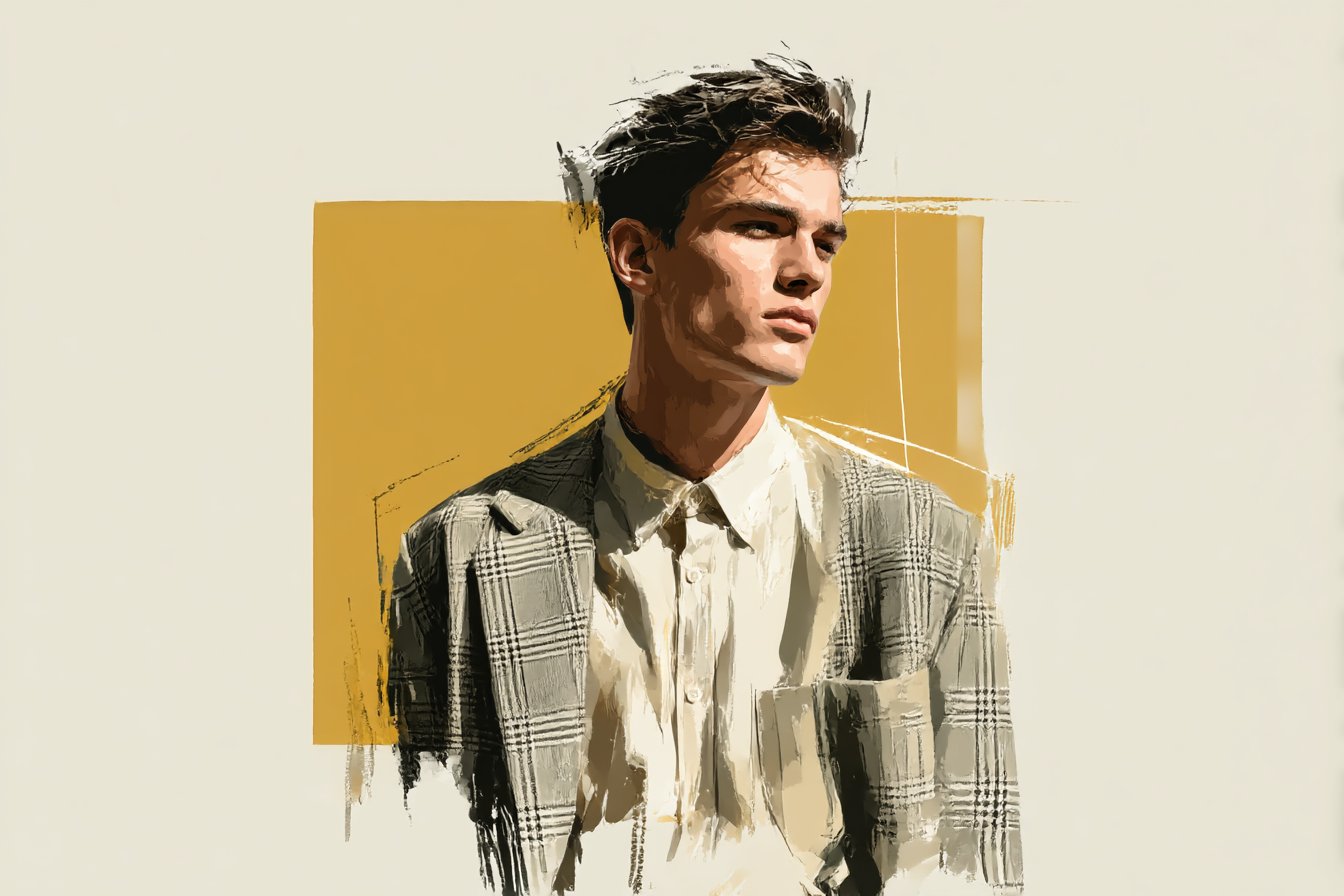
Don’t worry, it’s not you, it’s the $#@!%ing suit.” But I know myself better than to interfere with someone’s self-esteem over something as superficial as clothing.
Plus, accosting strangers about their clothing is a one-way ticket to becoming the weird anecdote in that person’s stories about their weird encounters with strangers. But as he walked away, I watched him think about how much money he dropped on that monstrosity just so he could look vaguely like he worked in an office, instead of wearing a $200 suit that fitted him like it was tailored for his exact dimensions. Unfortunately, this story doesn’t have a happy ending because this guy is out there somewhere wearing his ugly billion-dollar pantsuit as we speak.
Truth is, it’s not just him. There are millions of guys just like him wandering the streets of America every single day wearing clothes that don’t fit them in literally any way that matters. I’m not talking about style here.
Some people like skinny jeans. Others prefer straight-leg. Some like soft-shoulder blazers, others like structure.
Style is subjective. Fit is not. I’m talking about the fundamental relationship between garment and skin – clothes that don’t fit the actual dimensions of the body they’re trying to cover.
I’ve come to think of it as a national disease: Size Dysmorphia. Patients exhibit symptoms including: trousers that require belts to be worn as tourniquets to keep them from falling off, shirt collars so big they could fit an entire second head poking through, jacket sleeves that extend all the way to their wrists, and t-shirts that inflat e when the wearer tries to jog or mount a bicycle. The disease crosses age barriers (both young and old patients commonly afflicted), income brackets (money does not buy you good fit), and geographic regions (sadly even affects men outside the lower 48).
No one is immune. How did we become so out of touch with our clothes? How did American men collectively forget how to dress ourselves in clothes that fit our bodies?
Blame Vogue magazine, for starters. OK, not really Vogue magazine. But a variety of factors that converged over the years to really confuse us as to what “proper fit” should even look like.
Among those factors is what I call the Vanity Sizing Curse. Clothing manufacturers have been slowly but surely changing their size charts to fit smaller measurements over the decades. What used to be considered a Large is now a Medium.
What was a 36-inch waist is now labelled as a size 34. This is not a conspiracy theory – it’s happened gradually enough that we’ve hardly noticed. But it’s real, and it means we literally don’t know what our actual measurements are.
Remember when Old Navy was publicly called out for selling “size 30” jeans that were actually 33 inches around the waist? Or when customers discovered that The Gap’s “32 waist” jeans were often closer to 35 inches? Fast-forward to today and those companies have inflated their sizes even more so customers will “feel good” about purchasing clothes.
Now we’re at the point where men have no idea what size we actually wear. I have a buddy named Eric who lost 30 pounds recently. Opened up his closet to buy new clothes and went shopping confused.
“I always thought I was a 36 waist,” Eric said to me. “So I tried on a size 34. They were too big.
Then I tried a size 32. Too big! Aren’t you supposed to go DOWN a size when you lose weight?
I ended up having to buy 30 waist trousers!” He laughed. But he isn’t actually tall enough or slender enough to have a 30-inch waist. His “size 30” trousers are probably closer to a 33.
But now he has no idea what size trousers he actually wears. When he wants to buy shirts or jeans online he has to guess, half hoping that the brand he’s looking at will have inflated their sizes. Most of the time he just orders two of them to see which fits, knowing fully well that he’s now doubling his carbon footprint and waste just because he can’t figure out if he’s an XS or an S.
Problem #2: Our collective refusal to tailor clothing. Guys these days assume that if they buy something off the rack it should fit them perfectly, as if leaving the factory. Get those trousers hemmed?
Don’t need to. Have a jacket that’s a half-size too big? Wear it with the sleeves rolled up.
Jacket a half size too small?squeeze yourself into it and pretend like those weird popping sounds in your shoulder joints are normal. I mention tailoring to most men and they give me a look that says I just suggested they should also hire personal assistants. “It’s too expensive,” they say.
“Or thatsomething for rich people.” Newsflash: those same men will happily spend $200 on a pair of jeans that are 4 inches too long and wear them pinned to their calves looking like cigarettes commercials from the 1950s, instead of spending $15 to have them hemmed and looking like $200 jeans. It adds up, guys. Factor #3: The overwhelming casualness of modern dress.
Another reason we Americans have no idea how clothes should fit is because we haven’t been asked to wear clothes that fit very often. Business Casual became Workplace Standard about a decade ago and was only further amplified by the pandemic, during which we were all told to wear sweatpants all the time. If you work in an office and are still required to wear suits five days a week, consider yourself lucky – or cursed, depending on how you feel about neck-to-floor covering garments.
But for most people, we went from expected dressiness to maximum sloppiness in the span of two years. And we’ve only recently returned to businesses asking us to wear trousers and shoes on a daily basis. Prior to that, no one cared how our clothes fit.
If you wore jeans and a t-shirt five days a week for your job, you probably didn’t learn proper fit. It’s okay, I didn’t either until about five years ago. When you’re told to wear as little clothing as possible on the reg, you don’t exactly spend time studying Land’s End catalogue for closet inspiration.
I learned this firsthand when my baby brother got his first office job last year. Poor kid grew up in the Era of Hoodies and didn’t own ANY clothes that actually fit him correctly. We went shopping and I realised he didn’t know any better.
His go-to “work attire” were baggiest chinos possible with an untucked oxford that floated like a shirt-shaped balloon around his waist. I forced him into some dress trousers and a fitted shirt and he looked at himself in the mirror and said: “This is weird. It feels weird how the clothes aren’t just hanging off me.” YOU TRY THAT AT HOME, KID.
CLOTHES ARE SUPPOSED TO TOUCH YOUR BODY. Factor #4: The explosion of plus-size and off-the-rack apparel. The sad reality is that most stores that sell clothes designed to fit the average American man will never properly fit the average American man.
Denim manufacturers purposely cut jeans with exaggeratedly wide legs so that larger customers can wear them. Off-the-rack shirts come in “regular” and “husky” body types so that larger men can fit into something other than a potato sack. Dress shirts are cut with wide bodies so that larger Americans can wear a dress shirt without feeling like they’re being squeezed to death by their own clothing.
Trousers have uneven proportions that don’t match the natural shape of an actual human leg. “Regular fit” dress shirts are roomier than most kings-sized beds. “The entire industry is designed to not make customers feel left out,” my photographer friend Marcus (who doubles as my stylist) told me.
“They don’t make clothes to fit us properly. They make clothes to sell to the largest amount of people possible.” So most men’s clothes are cut to not offend someone. They’ll never fit anyone “perfectly.” Combine all those factors and what do you get?
Middle America walking around like sumo wrestlers in clothes that fit somewhere between their body and Jaden Smith’s. The solution. Okay, so how do we fix this madness?
How do we North American males undo decades of misplaced sociological, economic, and stylistic changes to our dress sense and start wearing clothes that fit our bodies? Education. We have to understand what “proper fit” really is.
I’m not a tailor or a stylist, but I do know enough to explain the basics of fit. It’s not as complicated as some guys think. First, understand that proper fit does NOT mean tight.
Modern menswear has swung so far into the realm of “baggy” that “proper fit” is now being interpreted as skinny trousers that challenge yourRange-Rover-drivinglimits, shirts that restrict movement, and jackets that threaten to pop at the seams when you take a deep breath. Clothes should fit your body without squeezing it. Yes, some styles are meant to be tight.
But if your shirt feels tight when you button it, it’s too tight. Here’s how to know if your clothes fit you properly: Shirts: the seam on your shirt sleeves should sit right at your shoulder and not hang down your arm or pinch into the meaty part of your shoulder. The body should skim your torso without huge amounts of fabric puffing out at your waist when it’s tucked in.
You should be able to comfortably fit two fingers between your collar and neck when it’s buttoned. Your sleeves should end around the bend in your wrist, not halfway down your hand. Trousers: Your trousers should comfortably stay up on their own while allowing you to sit down.
They shouldn’t be SO loose that your buckle can slide 3 inches on your belt. And yet, they shouldn’t squeeze your hips or thighs so tightly that you feel constricted. The length should allow for maybe 1/2″ of “break” over your shoes or no break at all if you’re personally into that.
But they shouldn’t hang around your ankles like Papa Bear’s nappy. Jackets: Classic fit rules apply here. Jacket shoulders should actually match your shoulders and not sag down or pull up your arm.
Sleeves should allow for about half an inch of your shirt cuff to show. Jacket bodies should skim your torso without pulling when buttons. Notice I didn’t mention “skinny” or “large” guy here.
Fit is fit, no matter your body type. A larger man wearing appropriately fitted clothes will look 10x better than those same clothes with an extra 2 inches of saggy material hanging off his body. A smaller man will look better in clothes that fit his frame than Trying Too Hard in skin-tight jeans and a shirt you can bounce quarters off of.
You know how they say you shouldn’t discuss politics or religion at the dinner table? Here’s a hot take for you – I think you should avoid bringing up gender pay gaps and underwear models too. But you CAN talk about fit.
The most common question I get from men who are just starting their fit journey is: “How will I know if something fits?” My response? You’ll just know. Feel it in your bones.
Clothing that fits will feel like something’s touching you but won’t really bother you. It’s a comfortable feeling that you don’t notice most of the time because it’s just … there. Ill-fitting clothes constantly need adjusted.
Baggy clothes autumn off shoulders and require you to keep tugging your shirt back up. Too small and your trousers ride too low, your sleeves feel restricted, and your shirt feels like it was painted on. Clothes that fit move WITH you, not against you.
I’ll say it again for the folks in the back: if you buy something that fits you well, you’ll know it. If you had to ask. We could all spot the $300 Tom Ford dress shirt that fits just okay because it’s TOM F*****G FORD.
But what about the clothes you can’t tell? You know the ones I’m talking about. That $30 shirt from Target you’ve been meaning to return because “it never fits quite right.” Here’s the thing: your clothes shouldn’t be supposed to feel like that.
Think about it – if you drop $300 on something, it better fit you like it was made for your ancestors. But that doesn’t mean LESS expensive clothes can’t look as sharp. I have a generic brand polo from Target that cost me less than $20 I wear all the damn time.
It fits me so well that I look forward to putting it on each day. On the other hand, I once spent $300 on a Calvin Klein dress shirt that didn’t fit me right. I literally wore it once.
Here’s the truth your jumper boys don’t want you to know: Fit matters more than anything else in your wardrobe. Someone could spend $1,000 on a shirt and it will look kind of ridiculous if it doesn’t fit their body correctly. Another guy could purchase a plain white shirt from H&M for $15 and look phenomenal if it fits him well.
Brands come and go. Trends will fade (hello skinny jeans, how could you?). Prices will change based on supply and demand and whatever corporate greed matrix they look at each Friday.
But how your clothes fit is something you’ll control for the rest of your life. So how do you start knowing what fits? Here’s my tried-and-true method.
Get measured. Yep, I went there. But hear me out.
Go to your local tailor and let someone who makes a living off fitting clothes to your body correctly measure you. No, they’re not judging you. Ask for a breakdown of your actual neck size, sleeve length, chest, waist, inseam, and outseam.
Write these numbers down on your phone or keep them in a wallet folder. This, dear friends, will become your clothes-swearing Bible. My friend Trevor used to carry a business card around with his measurements listed on it.
People thought he was nuts until they realised he literally wore anything and looked put-together while doing it. He wasn’t buying “name brand” clothes; he was buying clothes that FIT. Most men don’t know their actual measurements.
They’re stuck buying whatever tag says fits them without any idea of what size they actually are. How can you remediate something when you don’t know the problem? When in doubt, try it on.
You can’t always rely on tags. My Medium shirt from J crew is a Large in my Banana Republic shirt, and mySmall Banana Republic shirt is actually a Medium. Sizes don’t make sense across brands and even within brands themselves.
When shopping for clothes, try everything on before buying. Ignore the size tag completely until you’ve tried it on. You’d be surprised how many times I’ll try on a shirt and think, “Fuck, I can’t believe that small actually fits me.” Budget for tailoring.
I didn’t use to understand the obsession with getting your clothes altered but now that I do… Ho boy do I do. I was so intimidated the first few times I had my clothes tailored.
I remember thinking, “Who do I think I am wearing clothes that FIT me? I’m not George Clooney.” Newsflash: Clooney probably had every piece of clothing he owns altered as well. Getting your clothes tailored is cheap.
Most tailors will measure you for free (they just want to make sure you spend money with them later) and actual alterations don’t cost much unless it’s an intricate design. I spent $80 on a polo from a mall brand last year and had the sleeves and body tapered to my liking. Not only does it fit me better than my $300 dress shirts, but I actually wear it regularly because it fits my body.
Those $300 shirts only make it out of my closet when I’m dressing to impress. Know what doesn’t fit, dump it. This one took me a while to understand.
I used to hang onto clothes that “kinda sorta fit” me for some weird emotional reason. Look, if an article of clothing doesn’t fit you right now, it’s never going to fit you. Yes, even if you lose 20 pounds it’s still not going to look right on you.
Capping off 2022 by cleaning out my closet and realising I had over 15 shirts that either didn’t fit me right or I simply didn’t wear anymore. Why did I keep them? Weird pride?
My cousin just emptied out his closet of clothes that haven’t fit him in years. The hardest part was throwing out clothes that fit him WHEN he was in college and expected to graduate at. But boy did his wardrobe look 100x better after he decluttered.
Once you know what fits, become obsessed with how clothes should fit. This one is simple: learn what you like. Watch old films with handsome men and see how their clothes fit them.
Read Men’s Style magazines and pay attention to how their models’ clothes fit. Bookmark retailer websites you like and study how the clothes fit their models (hint: Fullbrook and JackThreads are kings at this.) You’ll start to naturally know when something looks “off” and when it’s tailored to perfection. You’ll be amazed at how different you look and feel wearing properly fitted clothing.
I promise. They said it would be life-changing.

They weren’t lying.
I ran into that sorry sucka from the coffee shop not too long ago, actually. We were at some industry event and he was wearing a different suit. Nowhere near as expensive, but it fit him!
It was like night and day. Instead of looking like an absolute tool, he looked sharp. Confident.
Properly dressed. I walked over to him, offered my hand, and said: “Hey man, I think we met at Starbucks a while back?” He smiled, shook my hand, and said: “Yeah we did. How you been?
I finally found a good tailor. Makes all the difference, huh?”


