
Of all the possessions I inherited when my grandfather died, I ended up keeping exactly three. His vinyl collection of jazz records (still splendid), his handwritten Christmas pudding recipe (indecipherable), and a pair of Northampton-made bench-constructed Oxford shoes that were older than me but had the potential to outlive me. Those shoes felt like magic.
Not just because they were perfectly constructed and would probably last me the rest of my life, but because they were his. The leather had creased to fit his feet over years of wear, moulding into a living record of his life. They also, to be fair, looked like something that would have passed muster with the teachers’ clique at a bad boys funeral.
Masterfully crafted? Hell yes.
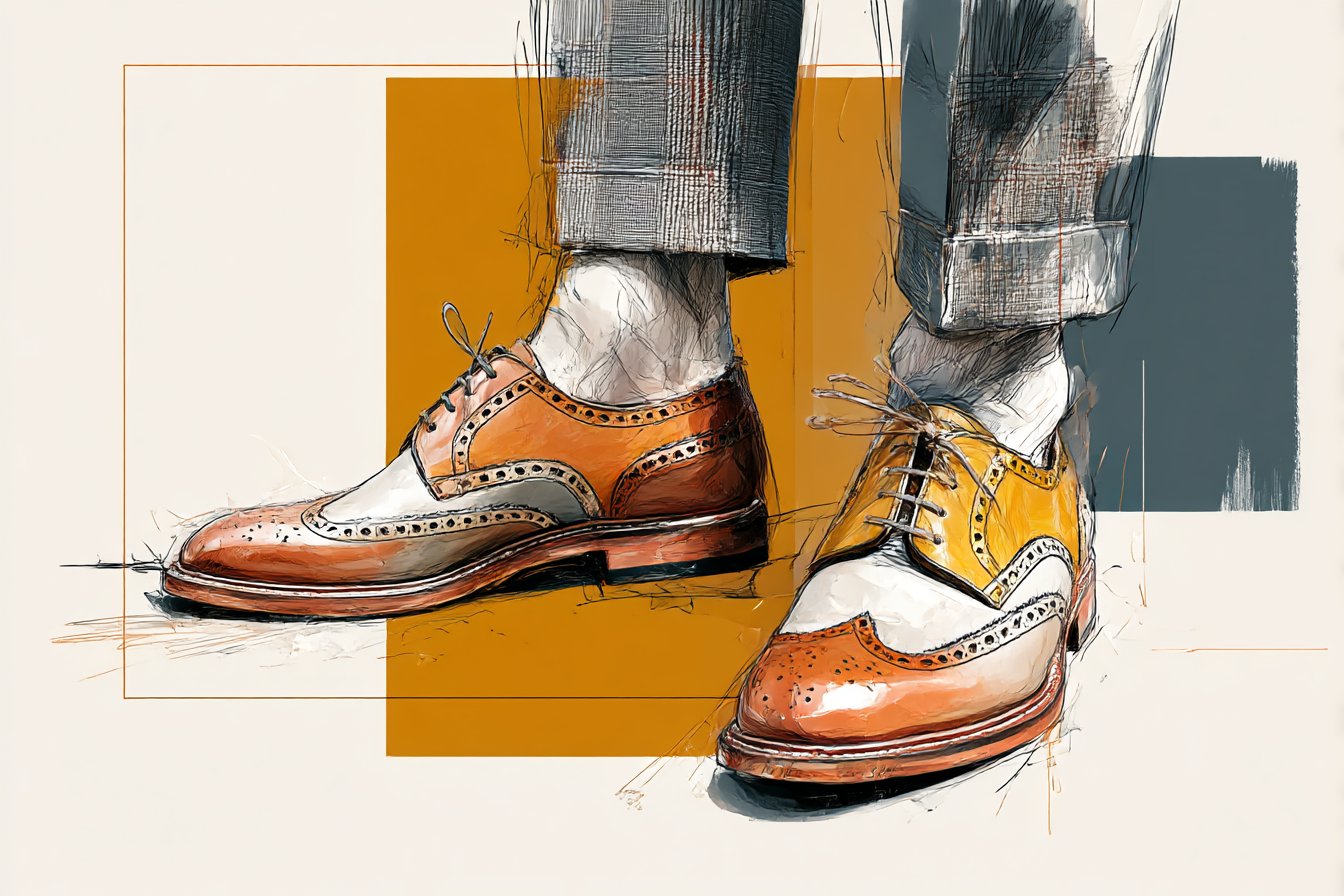
Fashionable?
Please. You see the issue with traditional British footwear has never really been quality – that still remains, rightly, the benchmark. It’s that for far too long, that quality had been applied almost exclusively to some pretty traditional styles that hadn’t really changed since the 19th century.
Don’t get me wrong, there’s still an awful lot of time and place for an Oxford, a brogue, or a Derby. But when you can wear trainers 90% of the time, why spend hundreds of pounds on shoes that look like they belong in a museum? Thankfully, a new wave of shoemakers are proving that British craftsmanship can work with contemporary styles as much as it can perfect traditional ones, and my god is it about time.
I spent the last month interviewing and visiting Britain’s best makers for an upcoming feature onews.com, and holy shit have things changed. Whilst wandering around workshops where they’ve been making shoes in the same way for generations, you’ll now find experimental shapes displayed alongside classic lasts, heritage techniques being applied to modern designs and young blood coming into the industry to shake up what’s been…let’s be honest, a bit of an old boys club. Take youngblood Northampton shoe company Tricker’s.
One of the oldest shoemakers in England (they were founded in 18 29 so technically still count as new-wave by Northampton standards) Tricker’s originally made their name producing heavyweight country brogues that wouldn’t have looked out of place stomping around post-nuclear Britain. Incredibly well-made but fashion forward about as much as Richard Dawson. Tricker’s are now working with Japanese brands on collaborations using experimental materials and finishes, as well as crafting hybrid styles that reference their impressive history without being chained down by it.
I met with their workshop manager, who’d worked at Tricker’s for over 30 years and started as an apprentice. “The skills themselves have stayed the same,” he explained to me whilst inspecting the welt on a boot under construction, “but what we apply them to has changed.” He pulled out a brogue boot they’d made as part of one of their collaborations with an influential Scandinavian designer. Same timeless construction but with a contemporary thick sole and insane colour blocking. Shoes that wouldn’t have looked out of place twenty years ago giving grandparents everywhere heart attacks.
Now these experimental hybrid boots are flying off the shelves. Leaving Northampton I headed down to see Sebastian Tarek in his East London studio, who trained as a traditional shoemaker but makes some of the most forward-thinking shoes around. Combining his dedication to craft with a respect for British tradition and willingness to challenge accepted forms and proportions, he is helping to take British footwear into the future.
His tiny workshop was an inspiring mix of traditional shoe-making accoutrements and modern tech. “the techniques should definitely survive,” he tells me whilst showing me around and whipping out a wild sideslashed boot he’d recently crafted “but just because you know how to make something, doesn’t mean you should ONLY make things from the 1920s.” Perhaps what’s most exciting about this new generation of British makers is their approach to sustainability. Traditional British shoes have longevity built into their very being – you’re meant to get them repaired not replaced – but some brands are taking this even further. At the Hackney workshop that houses Blackhorse Lane Collective (a small consortium of shoemakers), I met Eleanor who only uses leather from UK tanneries who practise traditional vegetable tanning techniques rather than using chrome. “We want to preserve not just the craft of shoe-making but responsible ways of working with natural materials,” she tells me as she cuts out a shoe pattern.
The results speak for themselves. Beautifully crafted shoes with traditionally welted construction but with very modern streamlined, minimal uppers. Cushioned soles without the bulky looking rubber that often plagues Chelsea boots.
No broguing, no cap toes, no fussy details that make so many English shoes feel dated as soon as you see them. Sleek without skimping on substance. I tried on a pair of her Derby boots and promptly signed up to the people’s shockingly lengthy three month waiting list.
Admittedly she’s at the premium end of what remains a fairly niche market. Not everyone can spring for shoes that start at £400+ but fortunately this isn’t just happening at the luxury end of the market. Companies like Grenson have been bridging the gap between traditional and contemporary for years, using more modern shapes and design details but keeping the prices relatively low and quality high.
Their “Triple Welt” boots exemplify this trend – taking a classic construction method and exaggerating it slightly to create something completely new without sacrificing the craftsmanship that means they’ll last you years with good care. Established brands are catching onto the trend too. Crockett & Jones – who I visited in their Northampton workshop – are the indisputable masters of the classic English shoe, but recently they’ve started experimenting with brighter colours, unlined casual shoes, and lightweight boots with Vibram soles that you’ll actually wear around town. “Things are always evolving,” James, their sales director and fifth-generation family member tells me. “Customers aren’t what they used to be.
They want shoes that can work in different areas of their lives.” He shows me one of their newest styles, a textured leather Derby with an slightly chunky rubber sole. It’s smart enough for 95% of offices but won’t feel stuffy if you decide to wear them on a weekend brunch. Nothing ground breaking by fashion industry standards maybe, but for a brand that supplied officers boots during WWI, it’s refreshing to see them take steps towards the modern world.
Bespoke and made-to-order shoemaking is also making a comeback, but in a way that doesn’t require a cavernous dining room and Rory steamrolling you on house prices. I stopped by SKOR, a small made-to-order shoemaking operation in Manchester who’ve got a distinctly northern take on footwear. Less polished than their southern counterparts but every bit as skilled, SKOR makes small runs of shoes with clean, simple designs that focus heavily on impeccable construction.
The owner, Dave, actually started his career making TV sets before getting hooked on shoemaking (“having something physical to show for your day” he tells me). “A lot of these older companies are limited by how things have always been done,” he says as he holds up a weirdly incredible shoe he made that was equal parts hiking boot and Chelsea shoe. “I never trained traditionally so I approach it with fresh eyes and respect for the process but aren’t afraid to fuck about with details.” Some of his clients are local lads that grew up around him wanting something special for an occasion, some are Japanese men that fly over to commission boots from him. More than any brand I spoke to, SKOR really encapsulates this new diversity in British footwear. My favourite maker of all though?
Carreducker. Along with creating seriously gorgeous shoes that feel modern yet constructed with timeless British technique, they’re running a shoemaking school in a bid to preserve these skills and pass them on to as many people as they can. Based around an intensive course where students make their own pair of shoes from start to finish in their airy, central London workshop, Carreducker are teaching the new generation how to keep these traditions alive. “When I started no-one was really making contemporary shoes with classic British techniques,” Deborah, one of the founders tells me. “So I wanted to teach that.” Her own shoes are the perfect embodiment of this philosophy – traditional fundamentals paired with modern designs that push the envelope.
I loved an asymmetrically laced wholecut shoe she had on (made from one whole piece of leather with no seam visible on the outside) that looked subtle but had personality to spare. “British shoemaking has become synonymous with old styles,” she said. “Derbies, brogues, boots with burnished tips. Don’t get me wrong I love those things but we can do more than just copy what’s been made for decades.” The shoes should prove her point – they were some of the best fitting and most comfortable shoes I tried on the entire trip. Which brings me to the final piece of the puzzle, how we actually wear these shoes.
Traditional British footwear was originally designed to be worn for very specific occasions. The Oxford was for serious business, the Derby was smart-casual, and brogues were country shoes. Of course those rules were thrown out decades ago but many British makers continued operating as if they still applied.
What we’re seeing now though is a reaction against that, with brands focussing on creating shoes that can fit into as many areas of your life as possible without feeling stuffy or dressy.
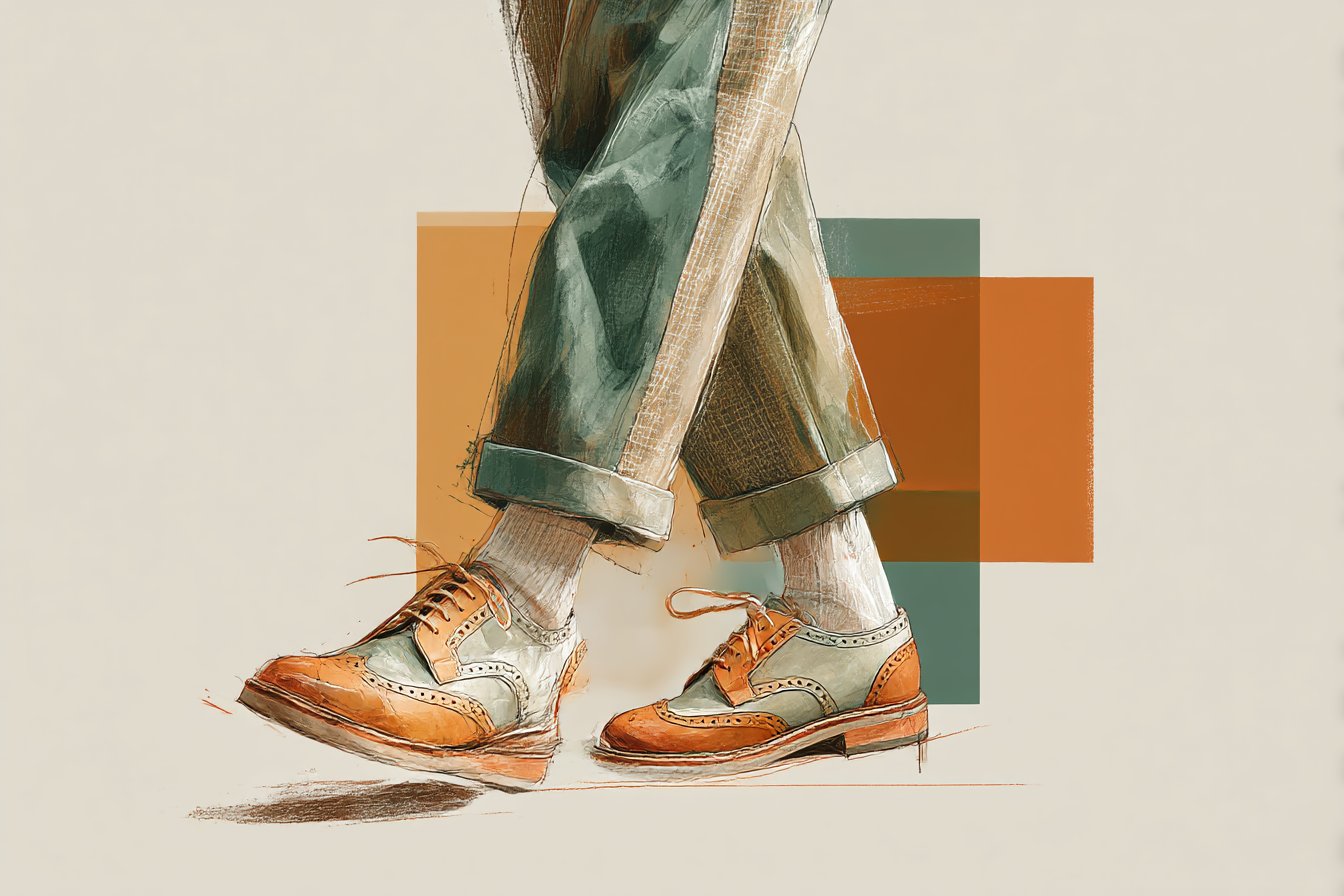
My wardrobe is a perfect example of this. Yes I still have the trusty Oxfords I inherited from my grandfather (now resoled and perfectly buffed, they are reserved for twice a year events where I need to impress my in-laws) but I’ve also got Tricker’s boots with Vibram soles that I wear with suits and jeans indifferently, minimalist Derby shoes from a tiny London workshop that feel strangely right with everything from chinos to shorts, and a pair of handmade loafers that have moulded to my feet from years of wear.
There’s something that connects all these disparate shoes though beyond just being excellently made, and that’s an approach to sustainability that feels tailor-made for 2021. In an age of throwaway clothing and rampant consumerism, having shoes that will last you decades and can be repaired again and again forces you to build a different relationship to them. My grandfather’s Oxfords have already survived longer than I’ve been alive, and if I look after them properly all of these shoes should do the same.
There’s something reassuring about that. If you haven’t checked out what’s happening in British footwear in a while because you associate it with wool socks and brown shoes, do yourself a favour and take another look. There’s an entire world of brilliant makers working tirelessly to preserve these skills *and* keep them relevant.
Just don’t expect to be able to afford many of them – once you know how a truly beautifully-made shoe feels you’ll never want to go back. Your wallet will hate you but your feet will thank you. And at least you’ll know that unlike trendy trainers, they’ll only look better with age.


