There’s a pub in Mayfair that I sometimes find myself in after press events. It’s not one of those themed Tourist-Trap-In-A-Box pubs plastered with union jack flags – more an honest-to-goodness boozer that narrowly escaped development into the world’s saddest Topman. But anyway, last month, I found myself sitting at the bar nursing a pint while four gentlemen approached and took the stools next to me.
Four guys who, for the life of me, must’ve been dressed in entirely different seasons. One was wearing a rumpled Barbour jacket and cords; one was wearing a clean white shirt and navy pinstripe trousers with just the subtlest cheque; one looked, I swear, like he was wearing head-to-toe Brunello Cucinelli, and the last was wearing chinos pressed so crisply they’d probably remove lint from your suits, slip-on loafers with no socks (in February mind you) and a polo shirt worn under an Alpha-1 quilted gilet. Four nationalities.
Four entirely different philosophies about dressing oneself. Me, the Brit.
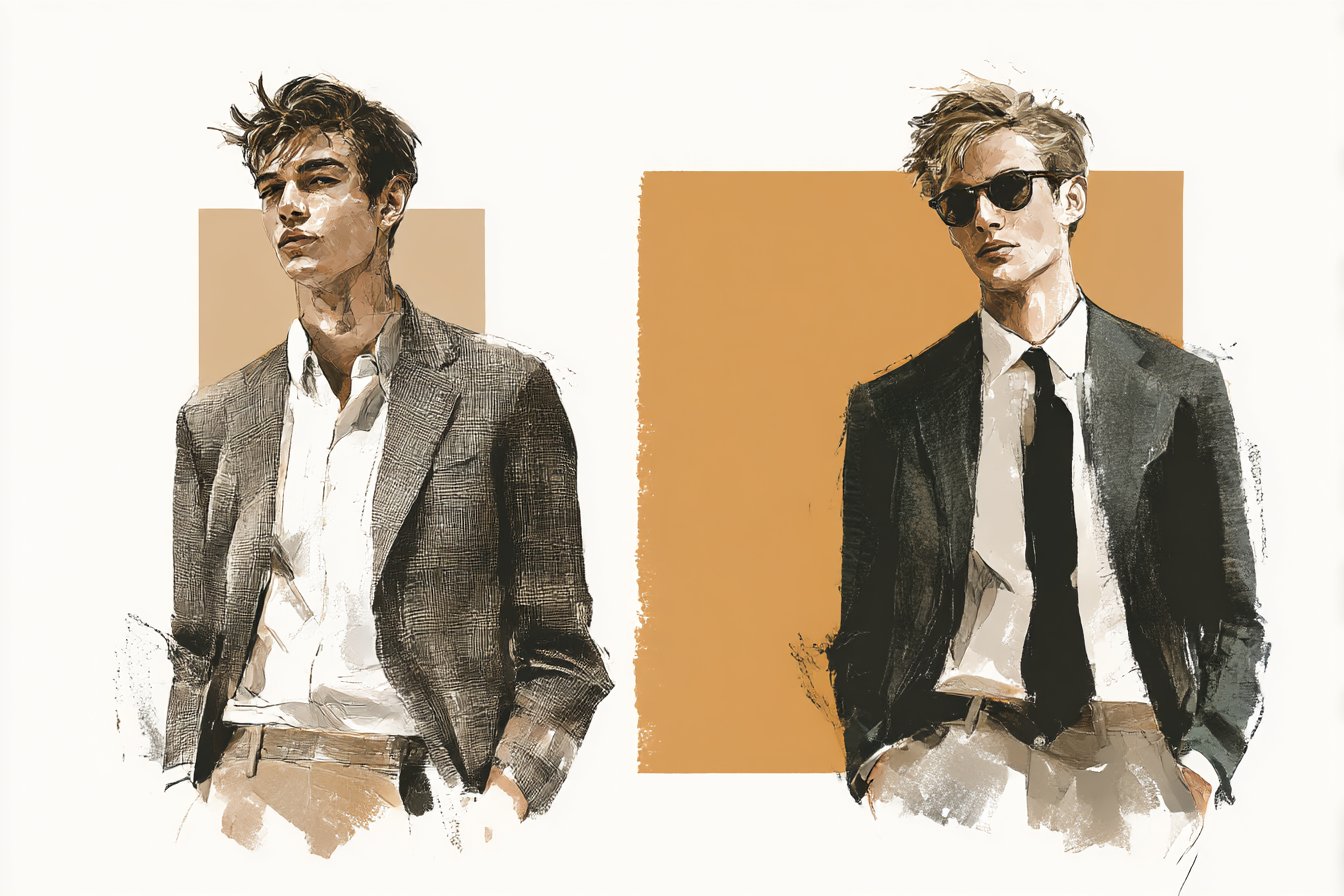
Marco, the Italian.
Antoine, the Frenchman. Chuck, the American. It was like the punchline to a joke we never got around to telling.
Anyway, we ended up talking (six pints will do that to a man) and it turned out these guys were old university friends meeting up for their yearly catch-up. And it got me thinking that they’d make perfect guinea pigs for a theory I’ve been meaning to explore: how and why do men from the UK dress differently to our European neighbours or our friends across the pond? Let’s take British style first.
OK, so what’s in our closets that we’re not sporting fake beaky caps and yelling “Bob!”? There’s something specific to British style that I think we excel at: shit that looks rumpled. Not dirty but lived-in.
Like you couldn’t be arsed iron that shirt but you put a decent cut of jacket on. My granddad (god rest his soul) was one of those guys who was casually stylish versus trendy (he’d have called it fashionable). His clothes fit impeccably but always looked like he’d slept in them.
White shirts bluesy at the collars and cuffs, jackets with elbows worn from years of leaning on pub tables while arguing about the merits of certain horse races with his lifelong friends. That comfortable level of shabbiness? That’s very British.
We want our clothes to look nice but god forbid we look like we’ve tried too hard. “Too neat” is practically treasonous in British eyes. Ask me how I learned that – I showed up to a mate’s wedding with my pocket square too perfectly aligned and spent the next twelve hours being asked if I was interviewing for a new job later that day. So Italians?
Our Italian friend at the bar, Marco, who – by the way is from Milan and works in finance – had on a cashmere-blend windowpane cheque suit in the faintest ping of purple. It wasn’t loud or ostentatious but it definitely had swagger. From his slightly-shouldered lapels to his dark brown burnished monk strap shoes there was an aura of confidence to how he was dressed.
Italian men have always seemed like they don’t feel the need to apologise for caring about how they dress (“Oh this old thing? Yeah I’ve had it about fifteen years.”) where British men tend to approach dressing well with at least a token sigh and eye-roll. I interviewed Brunello Cucinelli a few years back and one quote from our conversation always stuck with me: “Here in Italy,” he told me while effortlessly straightening his perfectly tied silk necktie, “A man learns about tailoring the same way he learns about food.
It’s not perceived as a pretension, it’s seen as part of life.” There it is. Italians understand clothes as a sensual experience – the feel of fabrics against skin, the way a jacket hangs off the shoulders when you move, the pop of colour from a single hand-stitched button. Italian style understands drama.
Italian suits will cut shorter, lapels will be wider, prints will be brighter, textures more luxurious. It’s never costume-y but there’s definitely a bit more flair. Take my friend Riz, who returned from Pitti Uomo last year a completely different person than when he entered.
He’d spent three entire days swilling wine and smoking cigars with a bunch of Italians who care just as much about men’s style as we do at GQ, and boy did it show. Suddenly his suits were marginally more fitted, his shirts looser around the collar, his pocket squares flashed with the vigor of a man who just doesn’t care what strangers think of him rocking a pair of sunglasses tucked under his now-unbuttoned third shirt button. “Cuando in Roma,” he said when I gave him a look, hat still askew. And France?
Antoine, the guy working in publishing next to me at the bar was wearing navy trousers, a blue blazer that seemed to cut his silhouette perfectly, a white button-down shirt and suede brown loafers. Nothing exciting on paper but holy shit did the overall effect pop. Everything he was wearing seemed… perfect.
The seams were just so goddamn straight. It was like he walked off the set of Marine Serado’s Twitter feed. French style is, I think, the epitome of studied simplicity.
Where we British try things on then wash them a few times to make them look lived in, the French will buy the simplest outfit in the room but execute it in such a way that they’ll look the sharpest guy there. I once interviewed a tailor in Paris who put it far more succinctly than I can: “American men buy a lot of things. British men buy old things.
Italian men buy beautiful things. But Frenchmen buy only the right things.” Ouch. He wasn’t wrong though.
French style is all about curating the perfect closet. Having less items, sure, but better than most. Where we in the UK might hang onto an old jacket because it’s worn in our favourite way, or an Italian might buy that beautiful wool even though they have three similar ones at home, the French will simply pare down until there is nothing redundant in their wardrobe.
Honestly, the French approach to clothes make me feel like a hypochondriac with diarrhea. Antoine told me he only owns five jackets, each for a different occasion. None too fancy for work but none too casual to wear out.
When I jokingly asked him if he just wore the same jacket every day since he owned so few he laughed in my face. “Why would I do that?” he replied, genuinely baffled by the suggestion. My French equivalent in my wardrobe has to be my jackets. Not because I’m minimal with them (I own 31 jackets as we speak!) but rather how nitpicky I am about details.
I spent a good month searching for the right shade of blue knit tie. Fingering it between my thumb and forefinger, dragging my girlfriend from department store to department store until we found the perfect shade of navy that wasn’t too bright but not too muted, too skinny but not too slim. “They’re all blue ties!” she exclaimed at some point in the fourth circle of hell that is Liberty’s accessories department. To a French sensibility?
Non mon chéri, not at all. Last but not least, American style. Fun fact: American style, or rather how American style is perceived by Brits, is probably the easiest to mock or misunderstand.
We see Ralph Lauren ads or Burberry ring-box salesmen frolicking through the english countryside in beanies and tweed and assume it’s all Brooks Brothers and Pilgrim’s pride cosplay. But American style, at least from guys I know back East, has a quiet logic to it that Europeans (myself included) frequently overlook. Americans love sportswear more than we do.
I’m not talking trackpants – we’re all sloppy opportunists when it comes to athleisure – but clothes with origins in sport. That quilted gilet that Chucks sporting isn’t all that different from a waxed Barbour jacket, it just comes from different traditions. America’s northeast has just as much heritage of wearing clothes meant for the great outdoors – but their great outdoors just happens to be nestled in between some aggressively steep hills rather than lochs.
Where British style largely originated from military uniforms, the NOTS and old Capri trousers we all pretended our dads wore, American style stems from university campuses, cowboy mythology and, dare I say, a general ease. I think that’s where we tend to get American style wrong. It’s not hoity-toity folk dressing up like they’re on the QE II (although that certainly exists) but rather everyday men wearing clothes that are meant to be worn.
Arguably the biggest American contribution to menswear is the rise of business-casual. Italians gave us the relaxed shoulder and French gave us peak menswear-fit but it was Americans who decided men didn’t always have to wear suits to work. And if you think about that for a second – it’s revolutionary.
Sure, the first iterations gave us god awful Casual Friday’s and hideous “dress-captain crunch” chino sacks but nonetheless it was a gamechanger. Chuck told me his father who worked in banking wore a suit every day to work without question, yet here he was three years removed from college and hadn’t worn a suit to work once despite working in the same industry. Accepting change and relaxation in American style seems to happen more freely than it does with our supposedly superior European customs.
But where do all these differences come from? Where we wear things to death versus tossing them once they’re faded, Italians swear clothing items don’t age like the rest of us mere mortals or the French will probably take you to court for buying five damn jackets. I asked each of the guys at the bar how they thought the others dressed.
It was surprisingly telling. Marco described Antoine and his French capsule wardrobe as “boring but perfect,” Antoine called Marco’s clothing choices “unnecessarily complicated but beautiful.” Both agreed Chuck was “too casual but somehow… right” and all three found us poor Brits – Oliver’s shirt wrinkled just so, his Barbour worn exactly how he liked it and his shoes with the patina of a beloved pair of concert boots – “quintessentially weird but comforting.” Because that’s what British style is I think. Comfort.
Comfort in our traditions, our class system, our headstrong refusal to adopt any outside influences. We love our clothes to have character, even if it’s fake-character. That Barbour has probably never left England but we’ll pretend it was gift from Aunt Agatha after she returned from shooting season in Scotland.
Wear things till they’re worn out and call it vintage. Italian men treasure beauty and craftsmanship; the way things look and feel and what they say about you when you wear them. French wardrobes are edited to within an inch of their lives, with each item serving a purpose and every unnecessary detail chopped away.
Americans?
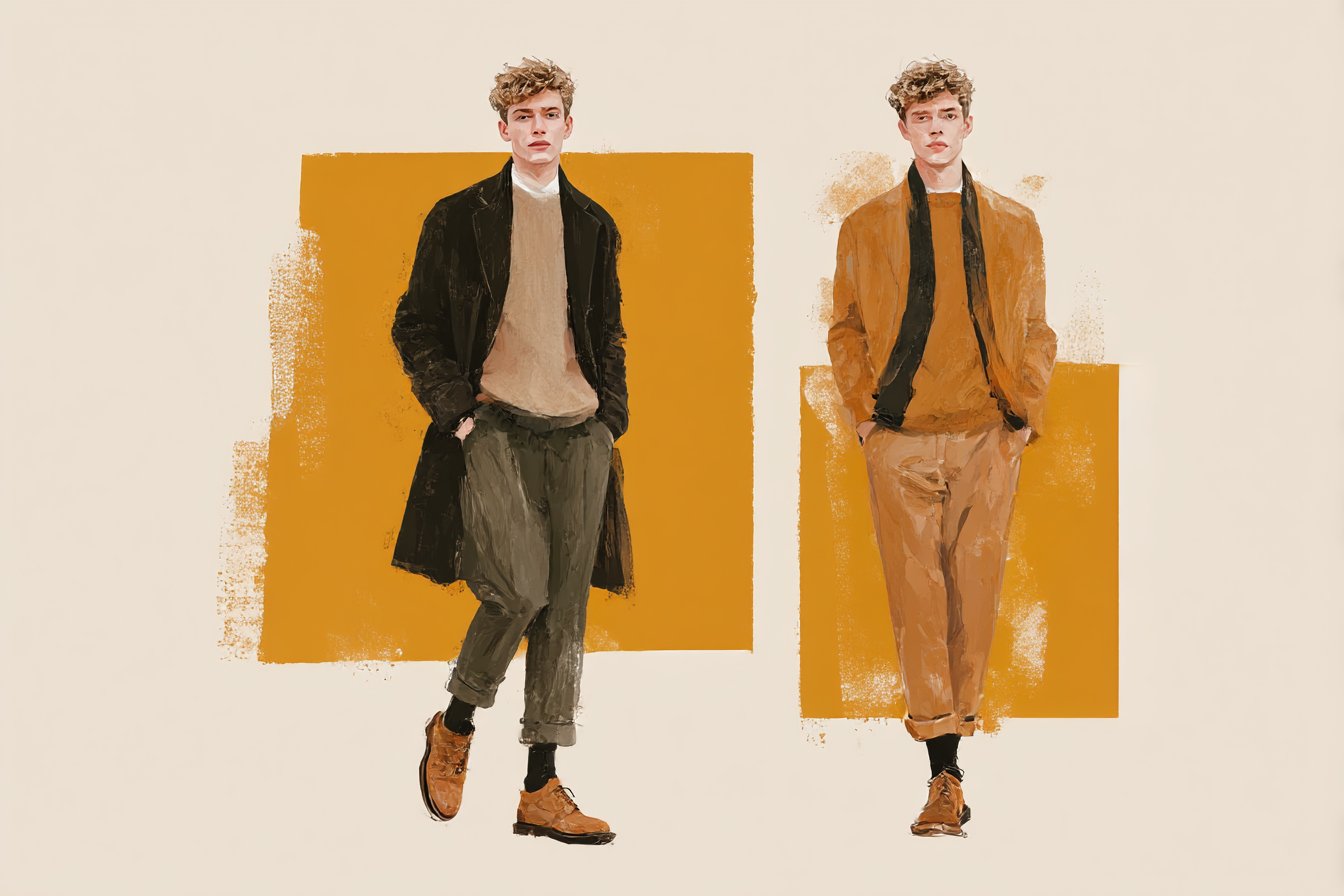
They dress how they want to dress. Don’t like wearing suits?
You don’t have to. Forget everything I said we dressed like – we dress however the hell we want to. As I was leaving the pub that night I took a good look at myself.
Blue selvedge jeans made in Japan but cut like they’re from some lost Brutish workwear catalogue, cashmere jumper knit in Scotland but cut by Italians, boots with an American brand heritage ingrained into the suede but named after a South African city for god knows why. I’m a fashion mutt through and through, just like more and more guys seem to be these days. That being said, that burn mark from grabbing the roast potato pan a lil’ too hard at dinner?
Jeans I won’t dare wash anymore because they’ve faded to my favourite shade of blue? That overall lived-in je ne sais quoi? Now that’s peak British.