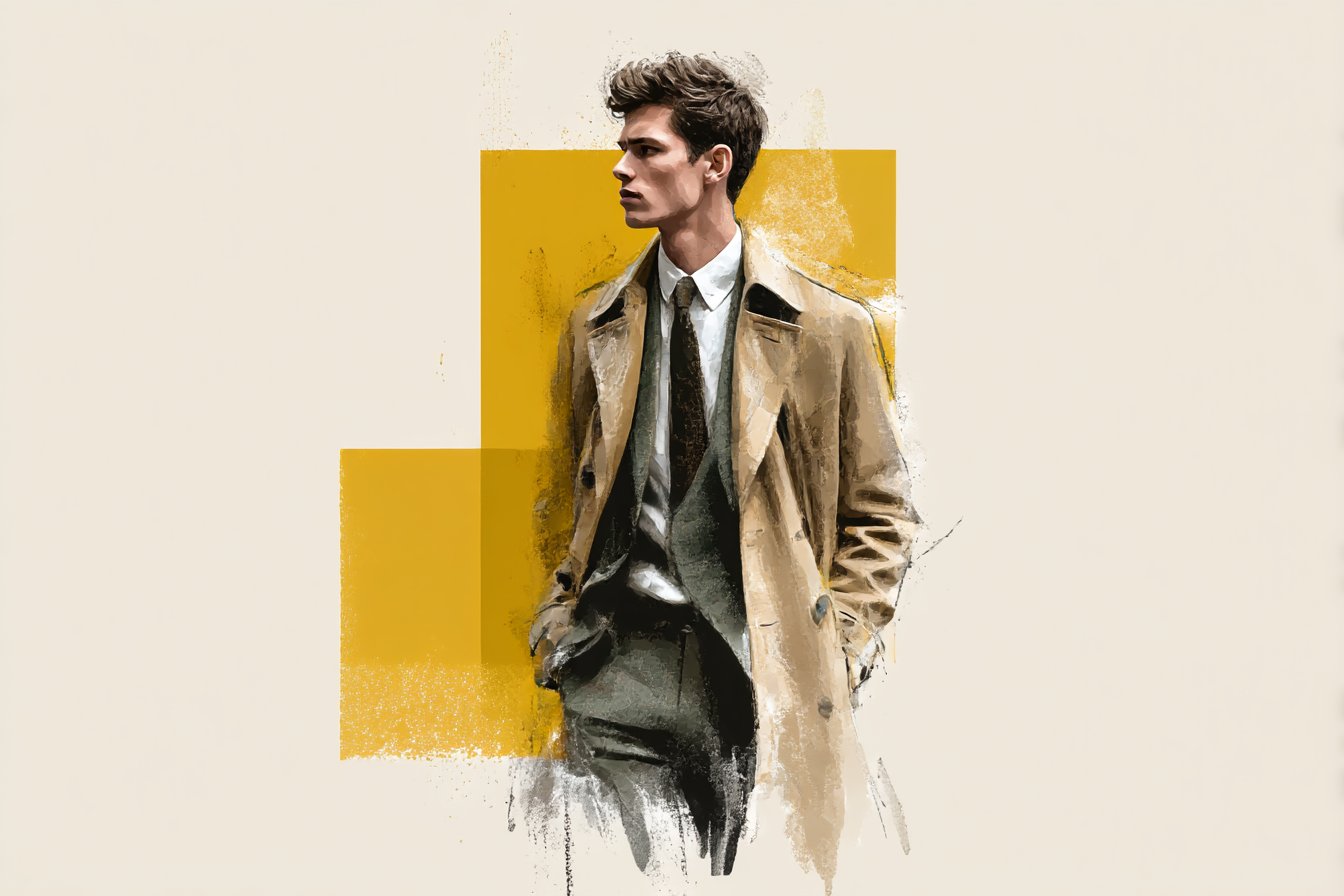
“There’s smart casual on the menu?” a work friend texted me back when I sent round details of our forthcoming Summer Party. He wasn’t the only one terrified by two words that send shivers down the spine of every British man. Those deceptive little letters-on-paper magically transform from stark black type into indecipherable hieroglyphics when they appear on an invitation.
I’ve witnessed mature, successful men turn into anxious pre-teens anticipating their first school disco whenever they’re confronted by a social occasion that asks them to dress smart casually. “Bloody smart casual. What the fuck does that mean?? ?” is a sentence I’ve heard countless times followed by lots of frantic wardrobe rattling. Since launching Sartorialist he.land I’ve been getting similar queries from confused readers.
Emails along the lines of “my work is doing an Xmas do with a smart casual dress code. Help!” consistently end up in my inbox every December.

I get why they’re asking.
Unlike say casual or business attire smart casual isn’t one easily defined thing. British smart casual dressing is fluid, ever-changing and depends on where you’re from, who you’re with and, quite possibly, where you work. London smart casual differs from Edinburgh smart casual differs from rural Yorkshire smart casual.
Ask anyone from outside of Surrey about wearing jeans to a Golf Club dinner and they’ll likely laugh in your face. I’ve been making various dreadful sartorial mistakes in these bafflingly vague dress codes for around fifteen years now. So enough dithering, here’s my inside guide to British smart casual… what it actually means. City Let’s start with London since navigating its various smart casual environs neatly divides into borough-based subsets.
How you dress smart casually in the City and Canary Wharf – even when the event itself is supposedly ‘casual’ – will almost always be skewed towards the smart end of the spectrum. Think trousers and not jeans, jackets and jackets not trainers, and blazers but no ties. While bankers have obviously eschewed suits and formal office dress codes over the years their idea of casual is still far smarter than most other industries.
I realised this the hard way one evening after turning up to a “casual drinks reception” in a reasonably new-looking blazer (Ralph Lauren Sport, actually), dark jeans and a button-down shirt only to find myself surrounded by men wearing full suits who’d undone their top buttons and removed their ties. Cue many hours blushing like a tomato while silently apologising to my polyester blend marketing suit neighbours. “Mate,” laughed my equally panicking finance banker friend as we strolled home down Baltic street. “Casual in the City just means you can take your tie off and wear brown shoes.” East London Flip that script and head East for a completely different smart casual mindset. In Shoreditch, Dalston, Hackney and co. smart casual takes the concept of dressing down an ordinarily ‘smart’ outfit and subverts it.
In certain circles anyway. Wearing an effortfully-chosen pair of Japanese selvedge jeans and a carefully considered t- shirt can be as smart or smarter casual than many obviously ‘smart’ outfits. Garments that confer status in creative circles – usually bought from niche retailers, heritage brand concession stores or vintage shops – might not compute as particularly special or expensive to outsiders.
Top-to-toe Comme Des Garcons? Killer smart casual in east London. Ditto a statement piece worn with entirely seasonal, everyday clothes.
Throw on a Waack Attack blazer with a pair of jeans and basic tee and you’re playing the game, not on some fashion secret blog with completely ignored. Remember that book event we mentioned up top? Held in a cavernous East London arts venue it wasn’t just the painfully hip floral shirts and clashing layers à la Grøn which screamed trendy McTrenderson about certain guests.
No sir. Some of the most understatedly dressed guys in the room were actually wearing the most expensive/random/status-conscious clothes of everyone there, viewed from an outsider’s perspective. One gentleman’s impeccably balanced outfit comprising a plain white Henley, faded Levi’s and worn-in Nike trainers probably cost him nearly £1k.
Case in point. West London Another smart casual code exists in west London. Chelsea, Kensington and Notting Hill depict their own ideal of looking effortlessly cool (i.e. effort and usually cash-intensive) while dressed smart casually. It’s Ralph Lauren all over again but styled in such a way that looks adlibbed rather than studied.
Pale blue chinos, clean white shirt, knee-high leather boots and denim jacket? Easy. But that leather jacket has been worn so you know it wasn’t bought with said chinos.
Business on the Bryant, Sunday brunch in Westbourne Grove; tailored shirt, jeans, suede cowboy boots and a baseball cap? Oh you were never in any office, bruv. “I literally threw this on” is written all over smart casual in west London, even when what you’re wearing is a carefully considered blend of faded red chinos, organic merino jumper and (£$$ EXPENSIVE) suede loafers that you spent three months getting distressed to perfection. Tailoring, done casually.
Accessories that say “stick-up-yourself” rather than “I-bought-this-at-Barbour-in-the-sale.” It’s a distinctly upper-middle-class form of smart casual that’ll have you peacocking around towns like you own them. Manchester Leaving London’s domains behind now and we start to see regional variations affecting the way smart casual is interpreted. Manchester – where I’m from – has always prided itself on its sartorial flair. Our thriving music scene helps with that.
But even in what you might consider ‘formal’ environments in Manchester there’s more leeway to experiment with what you wear. Vintage accessories? Works.
That festival tee buried underneath a gruff-looking overshirt? Sure. Statement-making colours, or patterns nobody told you were ‘appropriately smart’?
You’re in. Edinburgh Edinburgh and festival-time/sundry literary events especially. Tweeds of every variety are acceptable year-round despite the weather. So while a wool-blend Anderson & Sheppard shirt-jacket, leather elbow patches and your favourite chinos/broges combo might draw funny looks in Peckham smart casual-istas up north won’t bat an eyelid. Countryside Country pub/cafe smart casual is a breed of its own but there are regional similarities and differences within that too.
Expect waxed jackets, moleskin trousers, checked shirts and decent brogues to not look out of place in even smart-casual leaning gastro-pubs and restaurants in rural locations. It helps that said establishments eschew branded streetwear garms as staples of your ‘casual wardrobe.’ Trust me, The Quality Chop Housebers in London think your North Face jacket is hilarious. I’ve found this particularly in the Cotswolds where privately educated kids off from London will always stand out a mile from the locals with their idea of ‘country casual.’ It often involves Selvedge Denim and ridiculous amounts of plaid.
Pure stereotype of course but the ‘authentically English countryside smart casual’ look has been worn down by trudging about the countryside until it fits nicely. As opposed to looking like weekend kit proudly purchased from Retroland. Family/social events Asking your Uncle Fred to a birthday dinner has a smart casual dress code is very different from smart casually Christmas drinking with work colleagues. It’s asking one set of people to relax the rules surrounding your communal shindig and you not recognising that. Age also matters If your Dad’s invited to the same event as you then chances are his interpretation of smart casual is going to be a hell of a lot smarter.
Fun fact: men over the age of 50/60 automatically revert to clothing guidelines set in place when they were in their twenties. I’ve been “smart casually” dressed to events with my dad too many times to not notice the generation gap. He’ll always wear a collared shirt as smart casual, I’ll wear a nice t-shirt under a blazer.
Him: leather strap watch. Me: smartwatch. Him: tailored trousers.
Me: slim fit jeans. These aren’t just stylistic differences. Certain categories of clothing are also interpreted differently.
Men over a certain age still see jeans as inherently casual regardless of quality or cut. To anyone under the age of 30 a good pair of smart-looking denim jeans can and will be worn as smart casual. Golf clubs/country clubs Ah. You’ll know you’re dealing with a smart casual predator if your destination is a golf club or country club of some description.
Prepare for the most archaic interpretation of smart casual where certain fabrics (no leather soles), fits (no slim or skinny jeans) and cuts (not a pocketless shirt in sight) are verboten. On one occasion I turned up to a smart casual golf club dinner wearing smart chinos, a good cotton shirt and a nicely-cut polo shirt only to find everyone else wearing proper collar shirts. My gear wasn’t actually smarter than anyone else’s but by adding a collar to the shirt it satisfied the clubs very specific (scarlett-letter-esque) definition of smart casual.
Business casual if you will. It’s uniform dressing masquerading as relaxed guidelines. Whew. Got all that?
Good. British smart casual really isn’t about what you wear. It’s about deciphering the coded message hidden within a loosely-defined dress code.
Unless you work in finance or you’re doing something ace on a stag do you can pretty much ditch the suit. And it’s always better to be slightly too smart than too casual. When the occasion/venue/social group you’re hanging with allows for light interpretation of what smart casual actually means, here’s my ideal smart casual uniform:
- Trousers.
Not jeans. Although like we said above a dark, well-fitting pair of jeans can work too.
- A button down shirt.
- Shoes. Leather.
Clean. Well looked-after.
- A blazer. To wear, or not to wear as the occasion demands.
Build outfits around that formula and you really can’t go too far wrong.

On that note though, smart casual has become way more relaxed over recent years. As British men’s style has evolved, so too have expectations around what smart casual actually is.
Whereas ten years ago a formal suit would have been required wardrobe fodder for “smart casual Summer parties” and the like; nowadays they accept a wider interpretation of what constitutes “smart enough” dressing. So what’s gone? Well naturally the lines have blurred somewhat.
When smart casual can mean anything from “wear a suit but take your tie off” to “just wear clean trainers and a nice shirt” you’ve naturally increased the opportunity for folks to dress incorrectly. British smart casual is less of a dress code and more of a membership test. How you dress smart casually is less about the garments you wear and more about demonstrating your ability to read the room.
Can you spot when you can get away with wearing jeans and when it’s obvious no-one else will? Do you know when a blazer is required to fit in, and when it’d look damned suspicious wearing one? British smart casual dressing is all about knowing your place – and wearing it well.